
Office Towers
PORT destination dispatch banks that cut morning wait times when floors fill within minutes, with MRL cars sized for 1.0–1.75 m/s mid-rise duty.
From commercial office banks to transit escalators, Schindler systems are selected where fire resistance rating of shaft assemblies, load bearing capacity of machine beams, and measurable service life expectancy must hold under real traffic profiles.
Scroll horizontally to compare how the same elevator and escalator families adapt across building types.
PORT destination dispatch banks that cut morning wait times when floors fill within minutes, with MRL cars sized for 1.0–1.75 m/s mid-rise duty.
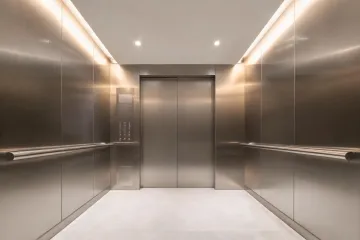
Quiet MRL elevators sized for furniture moves, strollers, and late-night resident traffic with documented dimensional stability of cab panels.

9300-class escalators and autowalks that keep shoppers circulating without congested landings during weekend peak hours.

Bed elevators planned around stretcher clearances, shift changes, and fire resistance rating at smoke-stop landings.
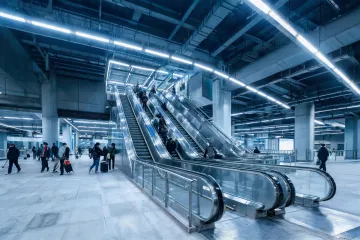
Heavy-duty escalators specified for continuous duty, impact resistance under luggage carts, and EN 115 family pathways.
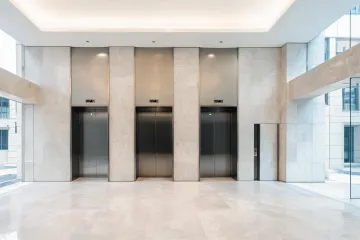
Separate duty classes for retail podiums and tower cores so thermal bridging at shaft walls and air permeability at doors stay within envelope models.
A 32-story tower rebalanced eight cars with PORT dispatch. Measured morning wait times dropped while fire resistance rating of existing landing doors remained untouched during the controller swap.
A downtown station replaced aging units with 9300-class escalators. Persons-per-hour capacity rose at evening surge without increasing structural truss depth beyond existing pits.
Stretcher clearances and door operator cycles were restored after a wing renovation. Facilities reported fewer door reopens without changing rated load of the cars.

Tell us whether you are balancing office banks, hospital bed cars, or transit escalators—we will map a duty shortlist to your industry schedule.
Request Quote